Testing

Wednesday, March 17, 2021

March 17, 2021

The Department of Tourism (DOT) Region VI endorses “Negros Season of Culture”

The Department of Tourism (DOT) Region VI endorses “Negros Season of Culture”


February 22, 2021
ENDORSEMENT

        The Department of Tourism (DOT) Region VI hereby endorses “Negros Season of Culture”, a global messaging platform promoting heritage, handicrafts, food, cultural experience, people and art of Negros Occidental established by the Angelica Berrie Foundation. The Negros Season of Culture will showcase cultural experiences during this digital transition through alliances. It will feature innovators in unique settings that tell the Negrense story, creative industries, rural landscapes and heritage homes that need to be preserved.

        DOT Region VI, therefore, commits to share the year-long activities of “Negros Season of Culture,” to its social media platforms, allied agencies, Philippine embassies and consulates.

        As a DOT Region VI-endorsed event/program, this office authorizes “Negros Season of Culture” to include the DOT Region VI official logo, It’s More in the Philippines and Safely Experience Western Visayas First visual brands on all promotional materials and official communications.


Tuesday, March 16, 2021

March 16, 2021

San Sebastian Cathedral

San Sebastian Cathedral


Consecrated in 1882, the San Sebastian Cathedral is the seat of the Bacolod Diocese, one of the oldest dioceses in the country and having administrative charge over a dozen cities and towns in Negros Occidental province, Philippines. The San Sebastian Cathedral is one of seven churches in our virtual Visita Iglesia this Holy Thursday.


Join us on April 1, 2021 at 10AM via FB Live. Like and follow our Facebook page @NegrosSeasonOfCulture and visit www.negrosseasonofculture.com for more updates.


March 16, 2021

Join us for a Visita Iglesia on April 1

Join us for a Visita Iglesia on April 1

In 1565, Miguel Lopez de Legazpi arrived in the Philippines in the company of Spanish friars, intent to Christianize the natives of the Spanish East Indies. In less than a decade, the missionaries were on Negros Island. Seven churches of Negros Occidental province in central Philippines are included in our virtual Visita Iglesia this Holy Thursday. 

Join us on April 1, 2021 at 10AM via FB Live. Like and follow our Facebook page @NegrosSeasonOfCulture and website www.negrosseasonofculture.com for more updates.


Monday, March 15, 2021

March 15, 2021

1st winner "Take a Selfie, Take a BAO"

1st winner "Take a Selfie, Take a BAO"
Woohoooo! Our very first winner for Take a Selfie, Take a BAO, March 9 Edition. Welcome to the BAO family, Honey Alcayde.


* Winners may claim their official BAO face masks at The Negros Museum, Monday to Friday, from 9am to 5pm, by simply presenting a valid government-issued ID with photo and signature.

Monday, March 8, 2021

March 08, 2021

Take a Selfie - Take a BAO

Take a Selfie  - Take a BAO


Celebrating BAO in the Year of the Metal Ox

Take a Selfie
Take a BAO

And get a chance to win an official BAO souvenir.
It’s so easy to join!

1.    Every Tuesday from March 9 to August 10, 2021, a “search challenge” will be posted on the Facebook Page of Negros Season of Culture. It will ask participants to search for a particular image on the body of the BAO sculpture installed at the front lawn of The Negros Museum, Gatuslao St., Bacolod City.

2.    To join, a participant must first LIKE the Facebook Page of the Negros Season of Culture.

3.    The participant will then take a selfie, or solo photo, showing himself/herself with the image being searched.

4.    The participant will then upload the selfie to his/her Facebook wall making sure to do the following:
•    Caption the selfie “(Participant’s Name on ID) takes a BAO”
•    Add #BAO2021
•    Tag the @NegrosSeasonofCulture

5.    Every week, five (5) participants whose posts reach the Negros Season of Culture community page first will be recognized as the week’s winners. Names of winners will be posted on www.negrosseasonofculture.com on the following Tuesday, together with the upcoming week’s new challenge search.

6.    Each of the 5 weekly winners will get an official BAO face mask.

7.    Winners may claim their official BAO face masks at The Negros Museum, Monday to Friday, from 9am to 5pm, by simply presenting a valid government-issued ID with photo and signature.

8.    Make sure you look good in your selfie! All winners, upon claiming their official BAO face masks, agree to allow the Negros Season of Culture to use their selfies for the promotion of BAO, including at our Gallery of BAO friends on our website www.negrosseasonofculture.com.

9.    A winner may win only once in the entire game period.

10.    All unclaimed BAO face masks will be forfeited 30 days after the date of publication of winners.

11.    Employees of the Negros Season of Culture and The Negros Museum, their agencies, and relatives up to the first degree of affinity and consanguinity are not allowed to join the game. 


Thursday, February 25, 2021

February 25, 2021

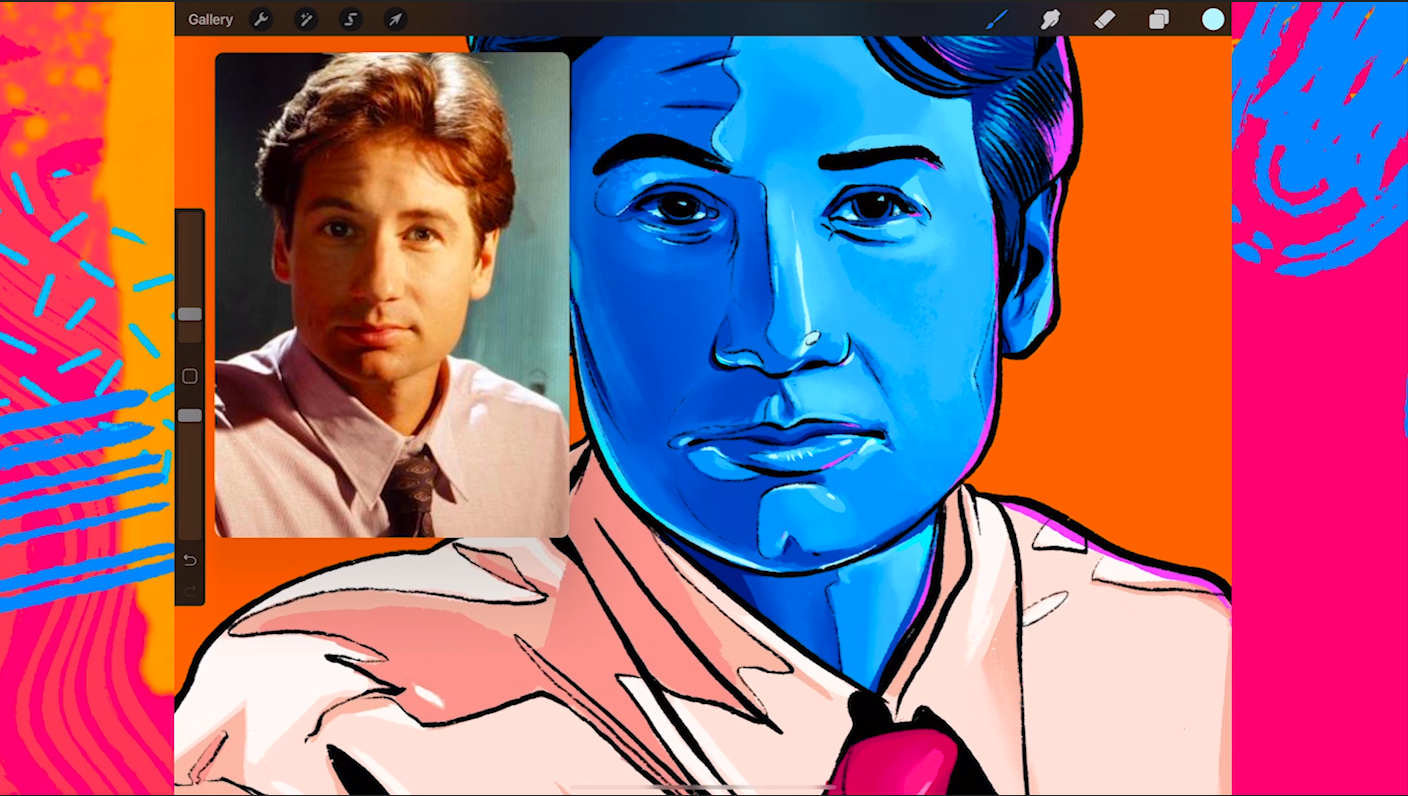
NEW DIRECTIONS Digital Art 2021: Negros | CHRISTOPH SAGEMULLER

NEW DIRECTIONS Digital Art 2021: Negros | CHRISTOPH SAGEMULLER


Candy-Coated Sadness

by Jubal Gallaga
 
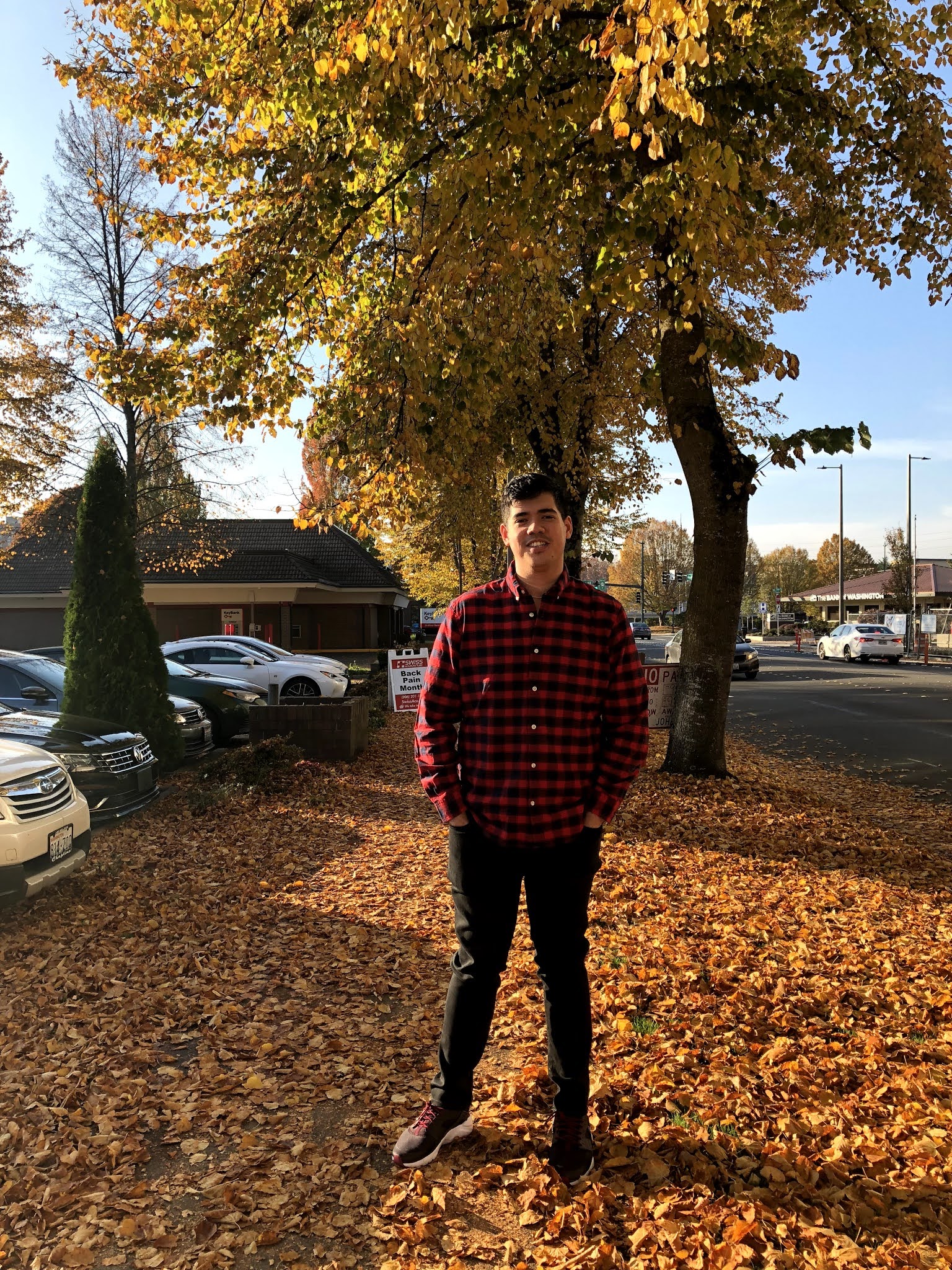
On paper, 25-year-old Christoph Sagemuller appears to be at the forefront of the digital wave of artists in this new decade. He lives in Seattle, Washington State, and works primarily on his iPadPRO and MacBook. He is strongly affiliated with the Musuem of Pop Culture in Seattle (popularly known as MoPOP) and he teaches art online on the learning platform, SkillShare.

However, just like his works, there is more to Sagemuller than lively colors and in-your-face images. Sagemuller graduated in 2016 from La Consolacion College in Bacolod City, Negros Occidental in the Philippines. His degree in Digital Media Arts, despite its name, gave him a thorough grounding in traditional art forms. He learned anatomy, how to paint with oils, acrylics, and other media. In truth, his shift to digital art was more out of convenience than a true preference. But perhaps, wisely so.

In 2018, Sagemuller moved to Seattle and it was simply easier and more expedient to do art on his computer and tablet. He didn’t have the space or the resources to set up a traditional art studio. Going digital meant that all the tools were not only in his computer or tablet, but, in the case of his tablet, he could carry it around anywhere and thus be able to draw anywhere. He could also safely store his work digitally. He did not have to worry about framing his work or damaging it with humidity.

He was not a stranger to digital media, however. He received his first drawing tablet when he was 12 years old and, as Sagemuller recounts, he would draw around 10 hours a day, even back then. “So I always kinda knew I wanted to be an artist ever since I was a kid,” he says, “In school I’d just be drawing in my notebook. I didn’t really care about school at all,” he adds, breaking into a laugh, “since it didn’t really interest me. I would get into trouble a lot with my teachers because they’d check my notebooks and they’d only find a few pages with notes and the rest would just be drawings. That’s what I would be thinking about all the time, just drawing, animation, and art.”

Sagemuller does miss working with traditional media. He admits he is slightly better at drawing with a pencil than with a stylus. He also shares that he gets a proper sense of scale of a piece when he sees it in front of him, than when he sees it on a screen. His digital work has existed both on the monitor and printed out to fill a 60-foot wall, and the difference seeing it on the wall versus on the screen is telling. That said, he still has a heavy preference for digital media. It makes the work easier. For example, he can select the exact color he wants and get the exact effect he wants faster. The struggle an artist normally undergoes to get that on physical media is now removed, so he can then focus on getting his idea translated into something tangible.

And Sagemuller’s ideas are tangibly eye-catching. They are visually arresting, immediately capturing your interest with bold colors and captivating subjects. Sagemuller works almost exclusively with portraiture. He feels an emotional connection to people that is just missing when he works on pieces without them, like landscapes.

Someone once pointed out that Sagemuller’s art is “candy-coated sadness,” an epithet that the artist embraces. His works are emotionally driven. “Art is the best way for me to communicate,” Sagemuller elaborates. He admits his mind does not think in words but in images and fragments. This is apparent in his trademark use of contrast, not just in the choice of bright colors, but more so, in juxtaposing those vibrant colors with melancholic subjects. He feels particularly drawn to these kinds of images. Just like when his family home in Bacolod was flooded and several family photographs were damaged, Sagemuller recreated the ones that meant most to him.

An emotional connection is important to this artist. When Sagemuller moved to Seattle, he felt a strong connection to Filipinos back home. He brings up how very supportive the art community in Bacolod City is, concluding that an art community may even be more important than art itself. And yet, as an artist who makes the most use of digital tools, he does get his share of comments on how digital art is not “real art”. Sagemuller quietly disagrees, pointing out that those who say so are almost always not fellow artists. He maintains, “It’s all the same. Drawing an image, whether with a pencil on paper or with a stylus on an iPad, it’s the skill that matters. If you give two people the same digital tools to create a drawing, it would not be similar, because artistry and skill exist in the person, not in the tools.”

Sagemuller is keen on sharing his expertise. He has taken the opportunity to do so by teaching on SkillShare, an online learning platform. He says that he started as a student himself back when he was still living in Bacolod City. The digital movement in the arts is not just providing new media for artists to create art, but to expand the reach of the artist: to be able to find teachers, students, even an audience all over the world. It was an especially useful avenue during the lockdowns. When the pandemic started, Sagemuller at first welcomed it as an opportunity to stay home and draw. But eventually, even the self-professed introvert realized the importance of human connection. Teaching, albeit online, gave that semblance of connection. Moreover, as revenue sources closed due to quarantine restrictions, being able to teach online provided Sagemuller a steady income.


“Don’t listen to people who say [Digital Art] is not “real” art or that it’s a “lower form” of art,” he
states. “That’s just their opinion. You should not be tied down by other people’s perception of
something just because they don’t understand it.”

Sagemuller’s work includes designing posters for MoPOP and the film “Logro” (a part of the Cannes Film Festival’s short film corner), as well branding identities for music festivals in the US. Now entering his field of vision is video game development. He has always played video games and sees it as a good medium for art, in fact, an interesting mesh of art, music, and narrative. Video game development provides the artist an avenue to merge skills, intersecting atmosphere, music, design, and story. As the physical world continues to crouch on lockdowns, Sagemuller slowly sees his artistic avenues opening up. “There’s a lot to explore,” he concludes.

His work is full of contrasts … choice of bright and vibrant colors juxtaposed with rather
melancholy subjects.


Sagemuller works almost exclusively with portraiture. He feels an emotional connection to
people


Digital media makes the work easier, for example he can select the exact color he wants and get
the exact effect he wants to show

Sagemuller’s work includes designing posters for MoPOP as well branding identities for music
festivals

When he moved to Seattle, for the first time he felt a strong connection to his Filipino side.

When the pandemic started, he welcomed it at first as he saw it as a great opportunity to
stay home and draw. But eventually even the self-professed introvert 
realized the importance of human connection.


Wednesday, February 24, 2021

February 24, 2021

New Directions : Faye Abantao

New Directions : Faye Abantao


Digital Images on Folded Paper: A Union of an Ancient Artform and Bleeding Edge Style
by Jubal Gallaga

Faye Abantao’s marriage of digital tools and simple paper has produced stunning works of art. “I want the people looking at my work to feel a sense of connection—seeing beyond the imageries and becoming aware of the inner essence. I want them to immerse and ponder on the expressions and emotions of each work and how they would relate it to their day-to-day lives. I want them to think of the boundless possibilities that there is so much beyond what their eyes can see, I want them to be able to feel that excitement when they view my art.”

When you look at Faye Abantao’s work, you immediately notice its dreamlike quality and are intrigued by the unusual texture of her pieces. Abantao doesn’t paint on canvas, she instead transfers images into pieces of paper, each one meticulously folded like origami. Hundreds of pieces of paper, carefully folded by hand, uniform in size, to receive an image lifted straight off a dream.

The pieces of paper are not there just to be different, the creases and folds create shadows giving the images depth. Their lines fashioning an almost rippling texture that gives the piece a mirage-like quality, like heat haze. A collector once said of her work that it was a tapestry, that it evoked the banig, the local sleeping mat woven out of leaves. The images by themselves are noteworthy but it is the medium that really lifts Abantao’s art to another level.

It is all the more surprising that her signature technique was almost an afterthought.

Faye Abantao did not come from a particularly artistic family. Her interest was in advertising, not in the fine arts. After she graduated, she was ready to join the corporate world when friends and fellow graduates invited her to join them in a group exhibition. And she did, for the fun of it. However, she wanted to do the exhibit justice and thought of how to make her work stand out.

Abantao admits that growing up she didn’t think of herself as particularly artistic, but she did have an interest and a liking for origami. As she grew older she enjoyed making collages, particularly of photographs she herself took. There were other things that would inform on what would become her style. For example, in her early work, people were frequent subjects but recently her art is focusing on landscapes.  Her use of color has also evolved, as it has changed from bright and colorful to subtler and muted hues. But it was photography and origami that formed the pillars of what would eventually evolve into her current technique. Regardless of subject matter or how its depiction, Abantao’s use of photographs and origami are constant and the core elements of her art.

Image transfer itself is not unique to Abantao, in fact, it’s quite common. What makes her work so striking are the images she creates and where she transfers those images to.

Abantao’s process starts with her being curious over something she read, saw, or heard, and then she decides to read more about it. Or, she chooses a theme she wants to explore. She then researches on it. She allows herself to be guided by what strikes her fancy: an image she sees that pops up in Google search results, an interesting fact, an idea that triggers a thought in her mind prompting her to follow it and see where that leads, and so on. She relies almost exclusively on the Internet for this research.

She then compiles these images and with the use of Photoshop, starts manipulating them to closely align what is in her mind’s eye. She doesn’t just use images she found online though, some are images she herself made.

She also begins folding the paper she will use. And the paper isn’t just any kind of paper. Abantao prefers pages from old books. She has discovered in her experience that acid-free paper is best at keeping the image after the transfer. She also finds it satisfying that these old books are being reused and repurposed. She finds that using paper as a medium gives a vulnerable, almost fragile, quality to her work. Paper is transformative as well as transformational, which are key elements in her art.

Origami lies in the heart of the transformative element of paper. Even the source of the paper she uses, from old books, leans into that transformative element. She takes a page off a book that carries text, folds it into a new shape, and then uses it as a vessel to carry images.  The paper isn’t what it originally was, it is now a canvas to hold an image. It has transformed.

And it is in that very difference, its uniqueness that makes it transformational. It is unlike any other canvas. The creases and folds give layers, textures, and depth to what otherwise would have been another image.

There is something engaging about the contrast of her almost exclusive use of digital tools and resources for the creation of the images, even the process of rendering those images onto the paper speaks of the contemporary, yet the medium that captures and supports those images are practically prehistoric: paper, folded by hand.

Abantao has admitted that folding paper is therapeutic for her and she can do around five hundred of these a day. In one solo show, she used more than five thousand pieces of folded paper for fifteen pieces of art.

Within a year of graduating from La Consolacion College, in 2015, Philippine-born-and-raised Abantao was exhibiting at the Orange Gallery in Bacolod City and her work was being scouted by galleries in Manila.  In the intervening years, she has not only exhibited in Makati, Quezon        City, Taguig, and Iloilo City but outside the Philippines as well. In 2016, she was warmly received in Indonesia and even managed to secure a residency in Gwangju, South Korea in 2017.

In spite of all these successes, Abantao is not a full-time artist. She can be, but she confesses that if she did not have a job to go to, she would have nothing to draw. She works full-time in an advertising agency, using the experience and interactions she makes going out into the world to influence and inspire her art. Being engaged in the world is what drives her curiosity which lets her find things to capture in her folded paper.

She had to deal with the global pandemic and it has definitely shown in her art. Her theme for 2020 was isolation. Even Abantao herself noticed a shift in tone in her output. Her work before was vibrant and full of color, now they are more muted and reserved. She has also shifted the focus of her work from people to more landscapes. Although, the dreaminess is still quite intact. She wants to delve deeper into this and is eager to experiment in using just black and white imagery.
-----

She finds that using paper as a medium gives a vulnerable, almost fragile, quality to her work


Abantao doesn’t paint on canvas, she instead transfers images into pieces of paper, each one meticulously folded like origami

When you look at her work, you immediately notice its dreamlike quality

“I want the people looking at my work to feel a sense of connection—seeing beyond the imageries and becoming aware of the inner essence.”