Testing: Visual Arts
Showing posts with label Visual Arts. Show all posts

Wednesday, November 18, 2020

November 18, 2020

Art is My Constant

Art is My Constant

I painted watercolor “thank you” cards for medical front liners who were risking their lives at the height of the pandemic.”


By Gigi Campos

As a young wife and mother transported to Negros from Manila in the early 70s, I easily fell in love with Negros—the landscape, the people, the arts and crafts, and definitely the food. Having taken some courses in interior design at the New York School of Interior Design, I partnered with a sister-in-law and opened a home furnishing store and interior design office in Bacolod. 

In the mid-80s a monumental crisis hit Negros that caused the collapse of the sugar industry. I soon found myself involved with different NGOs. With a small group of like-minded friends, we decided to spearhead livelihood projects for displaced sugar workers in Negros. Not long after, the Association of Negros Producers was formed and I became its founding president. The ANP’s mission was to provide an alternative source of income for the farm workers by promoting Negrense heritage and crafts.  

I also set up Reeds and Weeds, a company that manufactured products made from indigenous materials. I started to train and organize communities of weavers throughout the province.  

Then I fell in love with the mosaic art of Antoni Gaudi. On a visit to Barcelona I saw his radical approach to mosaic that mixed traditional square cut tesserae with irregularly shaped pieces, from broken ceramic tiles to stained glass, to other found objects. I was challenged. I told myself, I can do this! 

Upon our return home, I lost no time and started my first mosaic installation, a 4x8-ft high mosaic image of the sun for Solana, our vacation home in Sipalay, a city in the south of Negros Occidental. I was hooked. Many more mosaic installations followed in Solana—mosaic stairs, benches, tables, and garden decor.

I found fulfillment in sharing my passion for mosaic art. I wanted the community to recognize mosaic as an art form that can be pursued by anyone with the desire and passion for art. NVC Artisans of Hope is one of the beneficiaries of my workshops. Its founder, Millie Kilayko, was one of my students. Another is Lisa de Leon-Zayco who has already had several exhibits of her mosaic work in Manila and in Bacolod.

My most meaningful mosaic workshop came in 2019. I conducted it for the children of Kalipay Negrense Foundation. I was witness to the powerful impact of art and self-expression on the children, most of whom had experienced severe trauma in their young lives. 


And then my own trauma happened.

It was a diagnosis of breast cancer that shook my world. It came like a death sentence as I always prayed to God to spare me of this dreaded disease. I was fearful of the physical pain that came with it. I guess God sometimes leads us through a dark tunnel for us to appreciate the light that awaits us on the other side. 

At the onset, I struggled with the prospect of undergoing chemotherapy. I prayed for guidance. And in the end God spoke to me through the words of a priest in a homily about the lepers Jesus healed, when he said, “healing comes after obedience.” I was surprised when the priest turned to my direction and seemed to look straight at me and said, “obey your doctors and you will be healed.”

It has been a year since I was diagnosed with breast cancer. I’ve been through much, physically and emotionally. I am not yet at the finish line, but Philippians 4:11-14 says, “I have learned to be content with whatever I have. I know how to live on almost nothing, or with everything. I have learned the secret of living in every situation…with plenty or with little. For I can do all things through Christ who strengthens me.”

Through the pains and discomfort of my body, my mind kept telling me I could get through the depression, anxiety, and even cancer by doing something creative that could benefit others. I painted watercolor “thank you” cards for medical front liners who were risking their lives at the height of the pandemic. NVC, who led the project, tucked the cards among donated PPEs.

It was in my quiet moments that I discovered the magic of what life is all about. I discovered a special love for God’s creation—the beautiful blue skies, brilliant sunsets, and all the different birds and flowers in the garden. In my pain God gave me the passion to pick up my brushes and paint once again, to work with my hands and discover new crafts, and to put into words all the wonder and discovery I was experiencing. 

My art has followed the different aspects of my reality. One of these is my deep and lifelong relationships with the women in my life, relationships that have remained strong—my mother, my sisters, my daughters, and friends.

Another aspect is my faith that has inspired me to create various mosaics of the cross, entire Stations of the Cross, and images of Mary, Mother of God. My faith allowed me to travel the difficult road to healing. Ironic as it may sound, cancer gave me a renewed passion for life. It gave me the heart of a fighter, thriver, survivor.


Wednesday, November 4, 2020

November 04, 2020

A Tribute to Peque Gallaga

A Tribute to Peque Gallaga

The island of Negros always had a special place in the life, work, and art of Peque Gallaga. It was inspiration, refuge, and home, shaping his view of the world and his place in it. We pay tribute to him as we dedicate the first year of Negros Season of Culture to his memory. 


----

----


The Peque Gallaga Tribute

Produced by: The Angelica Berrie Foundation
for the Negros Season of Culture

Baba Torre
President- Angelica Berrie Foundation

Alan Gensoli
Creative Director

Mayee Fabregas
Production Director

Stephanie Hilado-Lindaya
Communications Director

Executive Producer
Jo Macasa

Writer
Vicente Garcia Groyon

Editor
Sheryll Lopez-Francia

Music
Emerzon Texon

Colorist
Richard Francia

Narrator
Jubal Gallaga

Sunday, November 1, 2020

November 01, 2020

Negros Season of Culture SPECIAL : Not an Angry Christ

Negros Season of Culture SPECIAL : Not an Angry Christ

In this video, Tats Manahan talks about the work of Alfonso Ossorio, in "Not an Angry Christ".


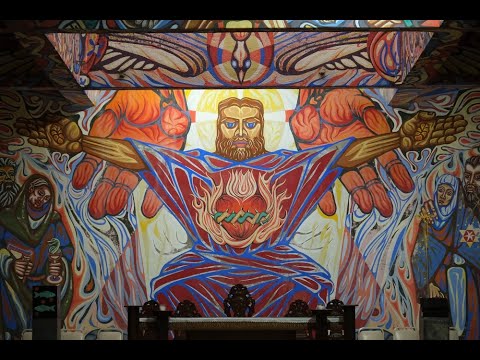
“Not an Angry Christ,’ a documentary re-visits the significance, symbolism and interpretation of the mural of Alfonso Ossorio, located in the Victorias Milling Corp.compound in Negros Occidental. The artist, son of VMC founder, Don Miguel Ossorio, was one of theearly artists of New York’s abstract expressionist movement, the art genre that moved the art capital of the world from Paris to New York.

The 160 square meter altar piece whose real title is “The Last Judgement,” at the Chapel of St. Joseph the Worker is popularly known as “The Angry Christ” because of the seemingly fierce countenance of the floor-to-ceiling Christ image. Further research during the on-going restoration of the chapel, the restoration team, headed by Liliane Rejante Manahan, unearths other profound meanings apart from the original research of Prof. Eric Torres in 1967, that debunks the popular monicker given the mural.


Friday, October 30, 2020

October 30, 2020

I Love Negros

I Love Negros

By Tey Sevilleno


“Negros is not just an enchanted kingdom from a fairy tale. It is alive and I am so happy to be
cast in it.”

I love Negros! This summed up my longing to go home to my island Negros a few years back, when suddenly it seemed I’d been gone for far too long. We are always told to fly out of our nests and spread our wings. But when I was in Manila building a career in a large corporation, I was constantly thinking of Bacolod and Negros, and everything that is in here.


While still at work in my office, I would daydream for days at the beach, chasing sunsets and the waves. Pictures weren’t enough for me. I had to make things up from memory. That was when I picked up a brush and some watercolors to paint sunsets and landscapes. I painted the landscape that my heart and soul yearned for back home. The majestic Kanlaon volcano and the endless plains of sugarcane were my usual subjects. Memories of fields of fire and smoke with a backdrop of a magical sunset haunted me. I painted that, in fact several times.

After a few months of daily painting, I mounted my first show by invite. I called on friends and family who were in Manila and their enthusiastic response told me I just had to go home. It wasn’t a dilemma anymore but a sure decision.


Packed my bags and shoved all my art stuff and flew home. With this love for Negros, I felt reborn with a new set of eyes, mind, and heart because I saw everything with all its facets. One normal day, I drove my friend to Banago port to take the “RoRo” ferry back to Iloilo. And as I turned back, a background of a vibrant orange sky and the raging golden sun hit the shanties from afar. It was amazing! When I went home I rushed to paint what I saw and felt at that moment—the shanties reflected the sun and the colors were shockingly bright, their stilts formed remarkable shadows beneath the many “balay-balay”, and there were a few boats preparing to go out fishing. It was magic! That must have been one of my most vivid memories. Banago became my inspiration for my Stilts series.

Not only do places inspire me, but here in Negros, people do as well. I will never fail to thank my mosaic guru, designer Gigi Campos. I am totally inspired by her art and her passion for design and for life itself. And of course, veteran artist Rodney Martinez who I highly respect and consider my mentor in art. He supported me and encouraged me to grow, and try out new things. He is someone I would want to be “when I grow up”.  I know that in Negros there are many artists in different disciplines—visual arts, design, fashion, theater, film, architecture, gastronomy. That’s why I love it here even more. Negros is not just an enchanted kingdom from a fairy tale. It is alive and I am so happy to be cast in it.


I knew then, and now, that home is where my heart and art is. “Ang akon isla” Negros.

Editor’s Note: The artist has since infected many with her love for painting. She conducts art classes and has inspired a few journeys. Her works are actively exhibited in venues in Negros and she maintains an online shop (inARTey) for her works. For more on her artistry get intouch with her through social media. Facebook @TeySev; Instagram @tey.sev; Twitter @TeyTeySev.


October 30, 2020

Living the Yaya Years

 Living the Yaya Years

Paquit: “You know, it was a long time before Marie began to talk.”
Marie: “It was Esther who was my yaya, very quiet.”


We have found many ways of preserving images of the past, but nothing captures the nostalgia of one’s childhood more hauntingly than cyanotype. Wikipedia defines cyanotype as a photographic printing process that produces a cyan-blue print. Its discovery in 1842 is attributed to Sir John Herschel, an English scientist and astronomer. Cyanotype looks very much like the blueprint that architects and building engineers use.


After 39 years in the United States, Angela Silva and her husband, Chris Juricich, returned to Negros from Berkeley, California. It was then that Angela embarked on a new career as a printmaker and a visual artist using cyanotype photography. “I combine my love of vintage Filipiniana and real photo postcards with printmaking and collage. My antiquarian sensibility layers rare photographs and studio portraits with maps and ephemera to denote a sense of time and place. In my work, I also explore identity and memory by combining found vernacular photographs with remembered stories,” says Angela. This includes ordinary, everyday photos and recollections from family members as well as her own.

Luckily for Angela, she comes with illustrious history. Her maternal lineage of the Javellana-Ledesma families provides abundant memorabilia, many of which have been tapped as subjects for Angela’s cyanotype projects. “Shadow Mothers” (Orange Project 2019, The Negros Museum 2020), pays tribute to the role of “yayas” or live-in baby sitters in the Negrense culture. These endeared women took care of children while the real mothers helped in the running of the hacienda or attended to social obligations. Angela shares, “I am interested in studying the mother-and-child pose as recorded in photos of biological mothers and attendant mothers…the stories of intimate history behind them—the mothering, the nurturing, and the subsequent separation between the women and the children they held with such pride and love.”


A larger cast of characters is had in Angela’s work “Juan and Nena 1926-1927”, where the artist chronicles the yearlong courtship of her grandparents, Juan Ledesma and Magdalena “Nena” Javellana. The final work, four volumes of postcard-size photo albums, track the travels of 10 cousins and friends onboard cruise ships to North America, South America, and Europe. Nena starts the voyage with two suitors and returns home engaged to Juan—a titanic love story on its own. But this masterpiece reaches beyond recounting a private family anecdote. It reflects a period in the existence of Negrenses that has defined the place and its people. And many times, stories like this cement a community’s pride in its cultural heritage. It is Angela’s duty to recapture those snippets of travel and courtship as authentically as possible.

That cyanotype as a form of alternative photography predates the film camera commands emotional connection. Angela produces the monochromatic blue image on archival quality paper to achieve a feeling of timelessness. And because it looks very much like a blueprint, it brings the art enthusiast to the very beginning of things, the starting point, the plot of a narrative about to unfold. Cyanotype, does indeed, romance the past to make it relevant once more.

Angela Silva currently works on new cyanotype projects, including one using old passports. View what she’s up to at IG@alegnaavlis and on Facebook: Angela Silva.


Thursday, October 29, 2020

October 29, 2020

Meet Negrense Artist, Darel Betita Javier And His Surreal Visual Illusions

Meet Negrense Artist, Darel Betita Javier And His Surreal Visual Illusions

Forever endowed with the pleasure of experimenting in every aspect of his work, Darel Betita Javier comes from a long line of esteemed Negrense artists.


Born and raised in a family of artists, Darel Betita Javier, unlike his two siblings, was not quick to follow in the footsteps of their parents. Graduating with knowledge of architecture in 1992 from La Consolacion College- Bacolod, Darel spent much of his time in North Carolina, working on construction projects, before finally returning to the Bacolod City of Philippines. Finally pursuing what he was always meant to, Darel is now a full time evolving artist, forever endowed with the pleasure of experimenting in every aspect of his work.

SCREAM. Colored, pencil, 40inx30in


You grew up in the Philippines in a family of artists. How important has been this positive family environment in allowing you to express your art?

Art for me is just like a sport. It’s a playful thing. I never imagined that someday I will be just like my late dad doing art and enjoying it. I did not take art seriously when I was younger. My two brothers were already joining art competitions from the time we were elementary and high school, but not me. It was only after I came back from the US that I became a full time visual artist.

You then emigrated to the US for a few years (North Carolina). A major culture shock and a substantially different environment from the Philippines. What major learning(s) did you bring back from the US?

To be on time. In the US, it is important to be on time for an appointment or a meeting. The people there are always punctual and they always respect everybody’s time.


King, Queen, and the Prince


How important for you, was the recognition of your talent in 2014 when you won the Philippines Art Awards- Visayas (Juror’s Choice Awards)?

2014 is the one of my most memorable years of my life. This award is important to me, as this is where I gained confidence to work harder in my field. This was the first time my work was displayed in Manila and the first time I saw and met famous visual artists in a show. It was the time I realized that the art world in the Philippines is alive and I’m so excited to be part of it.

This Girl Is On Fire


Self Portrait

You are always looking for new techniques in your art (coloured pen, pen and ink, paper cutting). How would you describe your style?

For me looking for a new style and technique in art should be continuous. I’m always curious and it’s a never ending learning experience. I want to explore learning new things and styles. I think I will never be content in doing or discovering new techniques, materials and ideas.

Some of my work looks like a collage but actually it’s a painting. I often use surrealism, conceptual realism, and collaged styles.

Mother's Paradox

You were born and brought-up in the Philippines, a Catholic country where religion is a central pillar within society. How important is religion in your art? What religious references do you like to refer to?

I am a Christian, I respect all kinds of beliefs and I don’t really touch religions in my art.

What is your creative process like? Where do you find your inspiration?

I usually draw it first on paper or tracing paper before finalizing it on a canvas. I often find my inspiration from my family especially from my wife, who has always believed in my work, since the beginning. She is a very supportive wife, and for an artist that is a very important thing.

Which is the role the artist plays in the society? How do you view the current art scene in the Philippines? How important is the space given to artists in modern Filipino society?

Artists help people and communities find their voice to be heard through art. It helps people express their feelings and learn to appreciate colors, textures, emotions and the beauties around them.

The Art scene in Philippines is very alive! A lot of new art galleries have opened, and more art exhibitions are happening. More young people have begun to appreciate art, and there are more younger art collectors emerging. The art scene in the Philippines is getting more exciting every year.

Any current or past Filipino artist who has influenced you?

I have a lot of present Filipino artists who influenced me a lot. I call them my art idols or the “masters”. Some of which are, Ronald Ventura, Rodel Tapaya, Andres Barrioquinto, Lynyrd Paras, Jon Jaylo and Jason Montinola.

Can you let our readers know of your favorite Art Museum in the Philippines?

ILOMOCA, Bencab & The Pinto Museum but I have never been there. The Pinto Museum is on my wishlist for when this pandemic ends. It’s the most instagram-worthy museum of Asia. As it is an hour from Manila, I tried to go there many times when I have group shows in Manila but it was to no avail, I’m always short of time. Because I usually stay only for 2 to 3 days and then go back again to Bacolod. Manila is so crowded, it’s a big city. I don’t belong there. I only go there when I have group shows.

SANCHUPAPA.  Oil on Canvas with Toilet Pump.


The five words that best describe your art?

Exceptional unique, expressively composed, and evolving.

In which city can we expect to see your next solo exhibition?

In Manila. I have upcoming solo shows but because of the pandemic, they were rescheduled.

If you were to name one mentor who has inspired you in your life and path as an artist, who would that be?

Of course my late dad, Eng. Eduardo D. Javier. He was an engineer, a visual artist, a muralist (who made the longest wood mural in Asia 1969), a sculptor, a Dad and a mentor.


This article appeared in L'Officiel Singapore and Luxuo.com . Interview by Julia Roxan.

Saturday, October 17, 2020

October 17, 2020

Balay ni Tana Dicang: Why a century-old home is able to move with the times

Balay ni Tana Dicang: Why a century-old home is able to move with the times


Thanks to the foresight of an amazing matriarch—of 17 children— Talisay home proves art and heritage could make a community thrive.

This story first appeared in the Philippine Daily Inquirer on July 10, 2019

By: Tats Rejante Manahan


Countless surviving members of Tana Dicang’s clan have taken on the task of maintaining the structure of the house and its carefully curated artifacts and objects, including the original furniture, to preserve the building’s beauty and spirit.

Like many an ancestral home in Negros, the house stands on the street where it was constructed almost 147 years ago, between the American Gilded Age and Progressive eras.

Curvilinear forms dominate the applied decoration in its interiors, characteristic of the progressive design prevalent in Europe more popularly known as Art Nouveau, also known as the Jugendstil decorative style.

This is Balay ni Tana Dicang, a bahay-na-bato standing on 6,000 sq m in the town of Talisay. One grilled window is shored up in bamboo poles, awaiting restoration, indicating the family’s dedication to preserving a house-monument built by an ancestor whose hard work, love and values were the foundation of the heritage home.

Forward-thinking

But more than the elaborate silver float, what amuses  are the rectangular, deeply fluted pillars alternately painted in sky blue and white, a backdrop to a set of mid-century chairs. Slumped on the chairs are throw pillows, upholstered in blue and white stripes as well, a suggestion of the forward-thinking attitude of the homeowner.

This receiving area, flanked on the right side by the stark white exhibition walls of Kapitana Gallery (an art gallery ), is the dispacho (office) where the original owner of the house,

Enrica Alunan Lizares, fondly known as Tana Dicang, went about her daily business over a century ago, managing six haciendas; carabao herds that supplied milk for her 17 children, tended by their corresponding wet nurses; a specialty food store; and an early version of a dress making salon specializing in elegant bespoke ternos.

She also managed three major sugar centrals of Talisay: The Silay Milling Co., the Bacolod-Murcia Milling Co. and Central Danao Development Corp., and later on, a printing press.

All these because she just wanted something to do after her husband, Efigenio Lizares, passed away after the birth of their 17th and youngest child.

Up a short flight of stairs is a wide landing, where gentility permits a visitor to make last adjustments on vestments and grooming before joining the social gathering in the living space one more flight up.

But the attention to one’s appearance is deflected by an arresting portrait of Tana Dicang, elegant in her terno, sporting a pair of John Lennon sunglasses, staring unflinchingly into the camera. On either side of her are President Manuel Quezon and Vice President Sergio Osmeña, looking quite chill despite the daunting posture of the Kapitana.

“It is said that because of her extremely large family, all of whom married into other large families all over the country, it was practical to court her for the amount of votes that might be represented by her clan,” narrates Adrian Villasor Lizares, a fourth-generation member of the clan, who now heads Enrica Alunan vda. de Lizares Inc.

Living memento

The interior of the house museum is nothing short of a living memento of that wondrous era in which this amazing matriarch lived.

Maintaining the structure of the house and its carefully curated artifacts and objects, including the original furniture of the house, can prove to be nothing short of stressful, if not for the collective cooperation of the countless clan members, whose support increases as the years go by.


The entrance to the house is through the silong (space underneath), where a silver carroza is parked, awaiting fiesta time, when the patron saint would be festooned with flowers, candles and ecclesiastical buntings, and paraded around town.


The Balay is maintained by one of the smaller haciendas, Hacienda Pait, all of whose income goes to the house’s maintenance.

When the house was formally opened on Sept. 10, 2008, alongside was the opening of Kapitana Gallery, a contemporary art space, which donates part of the proceeds from its art exhibition sales to the Balay’s maintenance.

For the sustainability of Balay ni Tana Dicang, art and heritage converge almost seamlessly; contemporary and vintage, owing in part to the foresight of Adrian Lizares and the burgeoning art scene in this province.

Art scene

Over the years, the art scene in Bacolod has evolved from merely existing to one that is thriving.

There is the Art District, an integral part of which is artist Charlie Co’s gallery, Orange Project. In this specific area, one finds art connoisseurs and

enthusiasts experiencing a refreshing brand and breed of art and artists. Monthly exhibitions and even exposure at Manila’s annual Art Fair have fueled the creative impetus, inspiring Lizares to set up an art residency program, apart from the 10-year-old gallery at the historic Balay.

The ABungalow artist’s residency program was birthed after artists exhibiting at Kapitana Gallery experienced working and residing at Lizares’ residence.

“Artists who were my friends stayed at home to fulfill our plans of hosting workshops, opening exhibits with a special way of presenting Balay ni Tana Dicang,” Lizares says.

“Art galleries with some attachment to Negros came back wanting to co-host exhibits. Later, they wanted their artists to come and conduct a residency here in Negros, which we tried on a domestic level at the beginning. The results have been nothing short of astounding… and the residency gained momentum.”

ABungalow derives its name from the 1950s American-style home Lizares rescued from demolition, which he transported from its location to a lot close to his own home, turning it into a single-story bungalow, “employing a simple style that exists in my own residence—a tropical American-style residence built in 1952.”

He further describes it as an area “surrounded by air and light, not to mention an ever-evolving garden in front, and an established mangrove in the rear giving the place a sense of being there… In the rear is another bungalow/work space for artists… a space all to themselves.”

Galleries in Manila have continued to recommend artists for the residency, where they interact with the community, “to provide some inspiration in their works,” even beyond the residency.

Plans include the visit of an American artist to work on a community-based art project, using locally sourced materials, which he has done in other countries.

A century-old home, lovingly maintained by descendants of one larger-than-life and tenacious lady, is partially subsidized by contemporary art. Typically looking into the future, she not only arranged all her children’s marriages, but also adequately provided support for each of them, provided ample land and influenced each with her impeccable lifestyle standards.

Since the matriarch had been fair and generous in the care and upbringing of several from the second and third generations of her clan, her home shall not fade into oblivion, but will instead move on into modern times and remain sustained in future generations, perhaps always by some activity prevalent in its present age.

Thursday, October 1, 2020

October 01, 2020

The Negros Season of Culture Team

The Negros Season of Culture Team
The Negros Season of Culture is a celebration of Negrense cultural traditions as expressed in various art forms. In 2020, it will include visual arts, culinary arts, film, and theatre.
 
Spearheaded by the Angelica Berrie Foundation, the Negros Season of Culture aims to bring Negrense arts and culture to the consciousness of the local community, and then share it with the rest of the world. Hence, the celebration’s tagline, “Rooted. Taking on the world.”
 
The vision of the Negros Season of Culture is to promote the cultural assets of our heritage and traditions, the unique identity of this province and the talent of its people.

We conceived of threading stories of creativity into one regional narrative, creating a platform for local, national, and global audiences to discover what makes Negros special.

We are living in an extraordinary time, in the midst of a global pandemic, in a moment of radical disruption. Our messaging is focused on the future. We want to inspire hope and tap into the creative spirit that has always been part of who we are as Negrenses.

We will survive this crisis, if we foster a spirit of resilience and solidarity that our ancestors had, and what we hope this generation of Negrenses will carry on.

The Season of Culture is a messaging platform for a place-based brand of culture rooted in identity, speaking to the world in the universal language of Art and Culture, featuring creative innovators in unique settings that tell our story, beautiful rural landscapes and heritage homes that deserve to be preserved. 
We know our native cuisine has inspired so many talented chefs.

We have seen film and theater geniuses like Peque Gallaga, whom we pay tribute to in our first segment, recognized internationally.

We have grown up with cultural icons like the Church of the Angry Christ, which is a national treasure. Most important, we showcase people who create handicrafts and native delicacies, local artists and ordinary people doing extraordinary things.

We will honor Peque Gallaga for inspiring so many of us to be a part of something bigger than ourselves, for teaching us to express our creativity in big bold ways that contribute to the story of this place we call home.

I will never forget how Peque staged Thornton Wilder’s “Our Town” in Visayan, taking us to remote towns on the back of flatbed trucks that served as our moving stage. It was an extraordinary way to encounter people in small barrios, see the spark in their eyes as they listened in rapt attention to the stories we brought to them.

There are many hidden gems in this province and we hope to bring them to life through the Negros Season of Culture. Connecting the stories embedded in this place is the message of hope we want to ignite in this challenging time.

We hope everyone will join us to promote what we love about our identity, our culture and our home.