Testing: Art
Showing posts with label Art. Show all posts

Thursday, February 25, 2021

February 25, 2021

NEW DIRECTIONS Digital Art 2021: Negros | CHRISTOPH SAGEMULLER

NEW DIRECTIONS Digital Art 2021: Negros | CHRISTOPH SAGEMULLER


Candy-Coated Sadness

by Jubal Gallaga
 
On paper, 25-year-old Christoph Sagemuller appears to be at the forefront of the digital wave of artists in this new decade. He lives in Seattle, Washington State, and works primarily on his iPadPRO and MacBook. He is strongly affiliated with the Musuem of Pop Culture in Seattle (popularly known as MoPOP) and he teaches art online on the learning platform, SkillShare.

However, just like his works, there is more to Sagemuller than lively colors and in-your-face images. Sagemuller graduated in 2016 from La Consolacion College in Bacolod City, Negros Occidental in the Philippines. His degree in Digital Media Arts, despite its name, gave him a thorough grounding in traditional art forms. He learned anatomy, how to paint with oils, acrylics, and other media. In truth, his shift to digital art was more out of convenience than a true preference. But perhaps, wisely so.

In 2018, Sagemuller moved to Seattle and it was simply easier and more expedient to do art on his computer and tablet. He didn’t have the space or the resources to set up a traditional art studio. Going digital meant that all the tools were not only in his computer or tablet, but, in the case of his tablet, he could carry it around anywhere and thus be able to draw anywhere. He could also safely store his work digitally. He did not have to worry about framing his work or damaging it with humidity.

He was not a stranger to digital media, however. He received his first drawing tablet when he was 12 years old and, as Sagemuller recounts, he would draw around 10 hours a day, even back then. “So I always kinda knew I wanted to be an artist ever since I was a kid,” he says, “In school I’d just be drawing in my notebook. I didn’t really care about school at all,” he adds, breaking into a laugh, “since it didn’t really interest me. I would get into trouble a lot with my teachers because they’d check my notebooks and they’d only find a few pages with notes and the rest would just be drawings. That’s what I would be thinking about all the time, just drawing, animation, and art.”

Sagemuller does miss working with traditional media. He admits he is slightly better at drawing with a pencil than with a stylus. He also shares that he gets a proper sense of scale of a piece when he sees it in front of him, than when he sees it on a screen. His digital work has existed both on the monitor and printed out to fill a 60-foot wall, and the difference seeing it on the wall versus on the screen is telling. That said, he still has a heavy preference for digital media. It makes the work easier. For example, he can select the exact color he wants and get the exact effect he wants faster. The struggle an artist normally undergoes to get that on physical media is now removed, so he can then focus on getting his idea translated into something tangible.

And Sagemuller’s ideas are tangibly eye-catching. They are visually arresting, immediately capturing your interest with bold colors and captivating subjects. Sagemuller works almost exclusively with portraiture. He feels an emotional connection to people that is just missing when he works on pieces without them, like landscapes.

Someone once pointed out that Sagemuller’s art is “candy-coated sadness,” an epithet that the artist embraces. His works are emotionally driven. “Art is the best way for me to communicate,” Sagemuller elaborates. He admits his mind does not think in words but in images and fragments. This is apparent in his trademark use of contrast, not just in the choice of bright colors, but more so, in juxtaposing those vibrant colors with melancholic subjects. He feels particularly drawn to these kinds of images. Just like when his family home in Bacolod was flooded and several family photographs were damaged, Sagemuller recreated the ones that meant most to him.

An emotional connection is important to this artist. When Sagemuller moved to Seattle, he felt a strong connection to Filipinos back home. He brings up how very supportive the art community in Bacolod City is, concluding that an art community may even be more important than art itself. And yet, as an artist who makes the most use of digital tools, he does get his share of comments on how digital art is not “real art”. Sagemuller quietly disagrees, pointing out that those who say so are almost always not fellow artists. He maintains, “It’s all the same. Drawing an image, whether with a pencil on paper or with a stylus on an iPad, it’s the skill that matters. If you give two people the same digital tools to create a drawing, it would not be similar, because artistry and skill exist in the person, not in the tools.”

Sagemuller is keen on sharing his expertise. He has taken the opportunity to do so by teaching on SkillShare, an online learning platform. He says that he started as a student himself back when he was still living in Bacolod City. The digital movement in the arts is not just providing new media for artists to create art, but to expand the reach of the artist: to be able to find teachers, students, even an audience all over the world. It was an especially useful avenue during the lockdowns. When the pandemic started, Sagemuller at first welcomed it as an opportunity to stay home and draw. But eventually, even the self-professed introvert realized the importance of human connection. Teaching, albeit online, gave that semblance of connection. Moreover, as revenue sources closed due to quarantine restrictions, being able to teach online provided Sagemuller a steady income.


“Don’t listen to people who say [Digital Art] is not “real” art or that it’s a “lower form” of art,” he
states. “That’s just their opinion. You should not be tied down by other people’s perception of
something just because they don’t understand it.”

Sagemuller’s work includes designing posters for MoPOP and the film “Logro” (a part of the Cannes Film Festival’s short film corner), as well branding identities for music festivals in the US. Now entering his field of vision is video game development. He has always played video games and sees it as a good medium for art, in fact, an interesting mesh of art, music, and narrative. Video game development provides the artist an avenue to merge skills, intersecting atmosphere, music, design, and story. As the physical world continues to crouch on lockdowns, Sagemuller slowly sees his artistic avenues opening up. “There’s a lot to explore,” he concludes.

His work is full of contrasts … choice of bright and vibrant colors juxtaposed with rather
melancholy subjects.
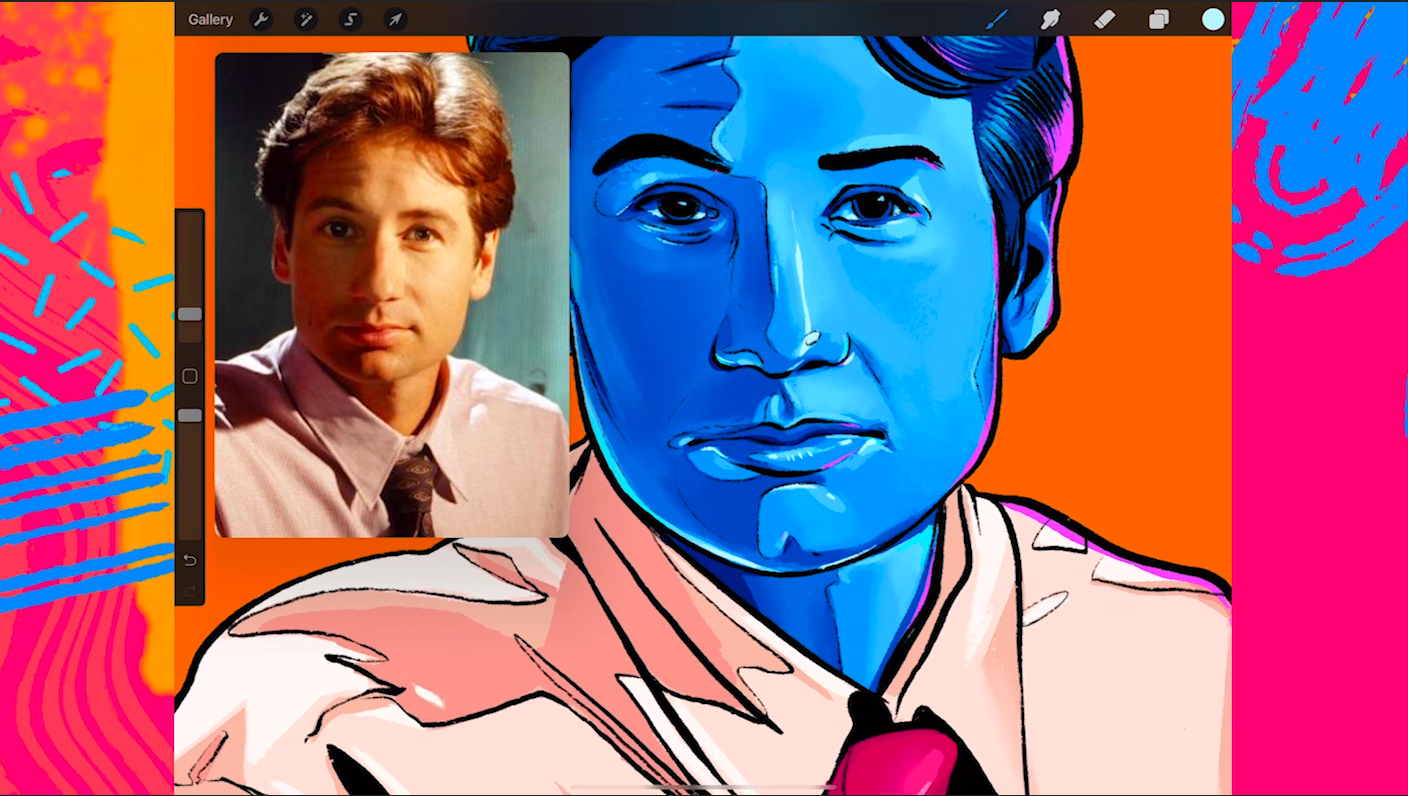

Sagemuller works almost exclusively with portraiture. He feels an emotional connection to
people


Digital media makes the work easier, for example he can select the exact color he wants and get
the exact effect he wants to show

Sagemuller’s work includes designing posters for MoPOP as well branding identities for music
festivals
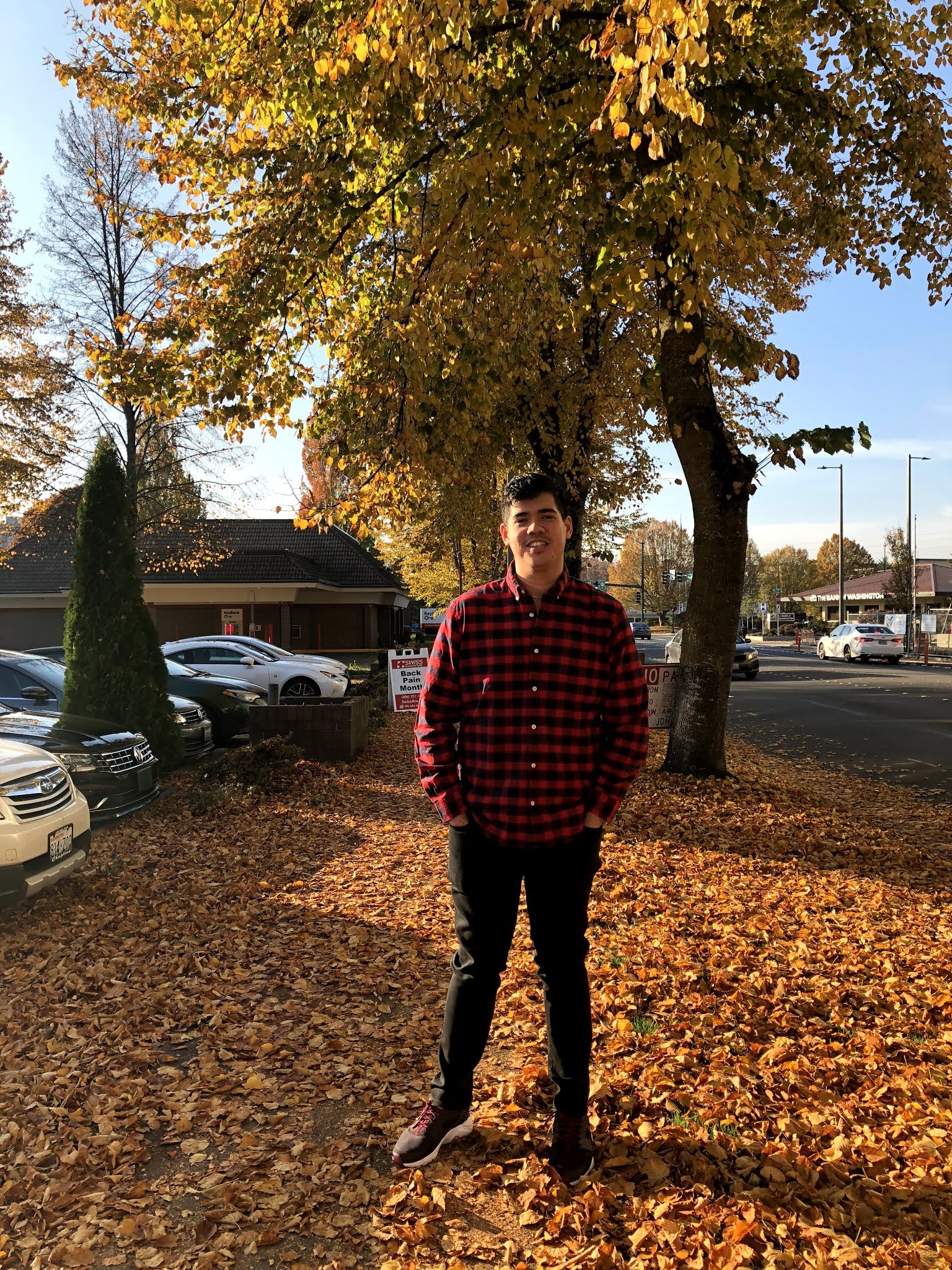
When he moved to Seattle, for the first time he felt a strong connection to his Filipino side.

When the pandemic started, he welcomed it at first as he saw it as a great opportunity to
stay home and draw. But eventually even the self-professed introvert 
realized the importance of human connection.


Wednesday, February 24, 2021

February 24, 2021

New Directions : Faye Abantao

New Directions : Faye Abantao


Digital Images on Folded Paper: A Union of an Ancient Artform and Bleeding Edge Style
by Jubal Gallaga

Faye Abantao’s marriage of digital tools and simple paper has produced stunning works of art. “I want the people looking at my work to feel a sense of connection—seeing beyond the imageries and becoming aware of the inner essence. I want them to immerse and ponder on the expressions and emotions of each work and how they would relate it to their day-to-day lives. I want them to think of the boundless possibilities that there is so much beyond what their eyes can see, I want them to be able to feel that excitement when they view my art.”

When you look at Faye Abantao’s work, you immediately notice its dreamlike quality and are intrigued by the unusual texture of her pieces. Abantao doesn’t paint on canvas, she instead transfers images into pieces of paper, each one meticulously folded like origami. Hundreds of pieces of paper, carefully folded by hand, uniform in size, to receive an image lifted straight off a dream.

The pieces of paper are not there just to be different, the creases and folds create shadows giving the images depth. Their lines fashioning an almost rippling texture that gives the piece a mirage-like quality, like heat haze. A collector once said of her work that it was a tapestry, that it evoked the banig, the local sleeping mat woven out of leaves. The images by themselves are noteworthy but it is the medium that really lifts Abantao’s art to another level.

It is all the more surprising that her signature technique was almost an afterthought.

Faye Abantao did not come from a particularly artistic family. Her interest was in advertising, not in the fine arts. After she graduated, she was ready to join the corporate world when friends and fellow graduates invited her to join them in a group exhibition. And she did, for the fun of it. However, she wanted to do the exhibit justice and thought of how to make her work stand out.

Abantao admits that growing up she didn’t think of herself as particularly artistic, but she did have an interest and a liking for origami. As she grew older she enjoyed making collages, particularly of photographs she herself took. There were other things that would inform on what would become her style. For example, in her early work, people were frequent subjects but recently her art is focusing on landscapes.  Her use of color has also evolved, as it has changed from bright and colorful to subtler and muted hues. But it was photography and origami that formed the pillars of what would eventually evolve into her current technique. Regardless of subject matter or how its depiction, Abantao’s use of photographs and origami are constant and the core elements of her art.

Image transfer itself is not unique to Abantao, in fact, it’s quite common. What makes her work so striking are the images she creates and where she transfers those images to.

Abantao’s process starts with her being curious over something she read, saw, or heard, and then she decides to read more about it. Or, she chooses a theme she wants to explore. She then researches on it. She allows herself to be guided by what strikes her fancy: an image she sees that pops up in Google search results, an interesting fact, an idea that triggers a thought in her mind prompting her to follow it and see where that leads, and so on. She relies almost exclusively on the Internet for this research.

She then compiles these images and with the use of Photoshop, starts manipulating them to closely align what is in her mind’s eye. She doesn’t just use images she found online though, some are images she herself made.

She also begins folding the paper she will use. And the paper isn’t just any kind of paper. Abantao prefers pages from old books. She has discovered in her experience that acid-free paper is best at keeping the image after the transfer. She also finds it satisfying that these old books are being reused and repurposed. She finds that using paper as a medium gives a vulnerable, almost fragile, quality to her work. Paper is transformative as well as transformational, which are key elements in her art.

Origami lies in the heart of the transformative element of paper. Even the source of the paper she uses, from old books, leans into that transformative element. She takes a page off a book that carries text, folds it into a new shape, and then uses it as a vessel to carry images.  The paper isn’t what it originally was, it is now a canvas to hold an image. It has transformed.

And it is in that very difference, its uniqueness that makes it transformational. It is unlike any other canvas. The creases and folds give layers, textures, and depth to what otherwise would have been another image.

There is something engaging about the contrast of her almost exclusive use of digital tools and resources for the creation of the images, even the process of rendering those images onto the paper speaks of the contemporary, yet the medium that captures and supports those images are practically prehistoric: paper, folded by hand.

Abantao has admitted that folding paper is therapeutic for her and she can do around five hundred of these a day. In one solo show, she used more than five thousand pieces of folded paper for fifteen pieces of art.

Within a year of graduating from La Consolacion College, in 2015, Philippine-born-and-raised Abantao was exhibiting at the Orange Gallery in Bacolod City and her work was being scouted by galleries in Manila.  In the intervening years, she has not only exhibited in Makati, Quezon        City, Taguig, and Iloilo City but outside the Philippines as well. In 2016, she was warmly received in Indonesia and even managed to secure a residency in Gwangju, South Korea in 2017.

In spite of all these successes, Abantao is not a full-time artist. She can be, but she confesses that if she did not have a job to go to, she would have nothing to draw. She works full-time in an advertising agency, using the experience and interactions she makes going out into the world to influence and inspire her art. Being engaged in the world is what drives her curiosity which lets her find things to capture in her folded paper.

She had to deal with the global pandemic and it has definitely shown in her art. Her theme for 2020 was isolation. Even Abantao herself noticed a shift in tone in her output. Her work before was vibrant and full of color, now they are more muted and reserved. She has also shifted the focus of her work from people to more landscapes. Although, the dreaminess is still quite intact. She wants to delve deeper into this and is eager to experiment in using just black and white imagery.
-----

She finds that using paper as a medium gives a vulnerable, almost fragile, quality to her work


Abantao doesn’t paint on canvas, she instead transfers images into pieces of paper, each one meticulously folded like origami

When you look at her work, you immediately notice its dreamlike quality

“I want the people looking at my work to feel a sense of connection—seeing beyond the imageries and becoming aware of the inner essence.”


Tuesday, February 23, 2021

February 23, 2021

NEW DIRECTIONS Digital Art 2021: Negros

NEW DIRECTIONS Digital Art 2021: Negros

 ---


His designs are known for their vivid, lush images with a strong emphasis on floral imagery


A Digital Connection
by Jubal Gallaga

The year was 2013 and Daryl Feril didn’t know where he was going. He had just graduated from La Consolacion College in Bacolod City, capital of Negros Occidental in the central Philippines, and had dutifully sent out resumés to all the companies he could think of, but unfortunately, he hadn’t heard back from anyone.

Then he received the phone call that changed his life. Was he willing to fly to New York City to design the illustrations for the Spring/Summer 2013 global advertising campaign for the DFS Group, luxury retailer for Louis Vuitton Moët Hennessy? It can be forgiven if he at first thought that the phone call was a prank, but he was soon convinced by Melissa Overton, the campaign’s creative director. Overton reached out to Feril when she saw his work on a blog. She knew when she saw it that it was exactly what they were looking for, and tracked Feril down using the images online.

Feril is largely self-taught. He remembered attending art workshops as a child. Before graduating with an advertising arts degree, he was an engineering student. His art skills were developed from having to figure things out by himself. He says that his art is about 80% hand-drawn and 20% digital but he does use digital tools even when drawing. He grew quickly enamored with digital illustration, but back in 2012 in Bacolod, there wasn’t anyone to teach him how to do it. There was no one to ask, no one to mentor him, he had to learn how to do things himself.

In less than a decade, Feril’s list of accomplishments and clients has become noteworthy. Aside from DFS, he has also been tapped by Tory Burch, Jo Malone London, Singapore Airlines, Heineken Asia Pacific, Ford Motor Company, The David Lynch Foundation, and even the Walt Disney Company.

His designs for these clients are vivid, lush images with a strong emphasis on floral imagery. Feril’s art is inspired by nature. He particularly remembers his childhood spent in the countryside in Bayawan, a town in southern Negros Island. He has always been artistic. He was constantly drawing, and to his mother’s dismay, even on the walls of their house. His family moved a lot when he was younger, from Bacolod to Cagayan de Oro City in Mindanao, and then back to Negros in Victorias City. He credits that for his exposure to different people and ways of life, all shaping his art today.

Out of his journeys, he has gained flexibility, being both an artist and a designer. And there is a clear delineation between the two. What he calls his design work, tends to be more colorful, with bold and strong imagery. His gallery work, what he calls his work as an artist, tends to be more personal, more restrained, and muted. He himself suggests it’s a way to escape from all the colors and lushness required by his clients from his design work.

He uses his gallery work to expand his artistry and to experiment. Defying common expectations, Feril as artist taps into other parts of his life. His artistic residency in South Korea in 2019 involved him creating a video installation as opposed to relying on illustration. He used the opportunity to not just explore and experiment in a different medium, but to challenge himself as an artist. He did not want to rest on his laurels. He saw installation as a personal weakness, a medium that was not just unfamiliar to him but one that he had never really worked with before. Instead of treading well-proven ground, he decided to face his fears and meet them head-on.

This is why Feril appreciates Bacolod particularly. He could theoretically be both designer and artist in any major city in the world but instead has chosen to work out of Bacolod. His reason is simple: the community. Bacolod artists are very generous with their time and expertise. When faced with the video installation in South Korea, he was both encouraged and aided by Manny Montelibano, a fellow artist with a background in the same medium. Feril feels it is quite rare to have this kind of support from fellow artists elsewhere.

It is also fair to say he is not giving up anything by working here. In this digital age, he can still entertain clients from all over the world and still enjoy the benefit of Bacolod’s artistic community.

Daryl Feril is an amazing fusion of two worlds that always seemed to be mutually exclusive. You could either be a critically-acclaimed artist yet not sell a painting until after your death or be a commercially successful designer but sell your vision to the corporate world. Yet here he is, walking proof that one can have commercial success as a designer whose designs are respected for their artistic merit. He is also a successful artist, whose work commands substantial prices. He lives in his hometown, surrounded by a supportive community, and blessed with a stable Internet connection to access an international client base.

This dichotomy is encapsulated by a simple philosophy of Feril. He is particularly pleased with his work for client Tory Burch. He feels that designing merchandise is the best way for people to be able to interact with his art. His designs on a bag are both beautiful, artistically appealing to the customer but also practical, a bag is something you use. “It is art,” he says, “you can touch, use, and bring home.”


He was constantly drawing, even as a child


 His art skills were developed from having to figure things out by himself


His work is full of color, with bold and strong imagery


 In spite of being able to work anywhere, he chooses to live and work in Bacolod City


Sunday, February 21, 2021

February 21, 2021

New Directions - Digital Art 2021: Negros

 New Directions - Digital Art 2021: Negros


By Jubal Gallaga

The Negros Season of Culture is an initiative to showcase the artistry of Negros Occidental. A province in the central Philippines, Negros Occidental has produced an incredible amount of artists that have enjoyed critical as well as commercial success at home and abroad. In celebration of the National Commission for Culture and the Arts’s National Arts Month, the NSC is proud to showcase three amazing young artists from Negros Occidental.

These three artists are featured by the Negros Season of Culture as they discover, explore, and even pioneer areas in art and design during one of the largest global pandemics in history.

Faye Abantao, Daryl Feril, and Christoph Sagemuller have more in common than being Negrenses. These three artists graduated within years of each other from La Consolacion College in Bacolod City, the capital city of Negros Occidental. They are young, dynamic artists who, due to their schooling, have a grounded foundation in the fine arts but have branched out, experimented with, and are now using new and exciting media for their art. They are also the farthest thing from the stereotype of the starving artist.

Abantao, Feril, and Sagemuller are successful both critically and commercially. They each have several exhibitions under their belts. Their art pieces and designs command interest not just from private collectors but from Fortune 500 companies. They represent a new wave of artists from a place that has always celebrated and supported the arts.

They are also at the forefront of pushing the boundaries of what is possible in the current Information Age and the nascent Fourth Industrial Revolution. The Internet is used as a source for research as well as ways to communicate with people all over the world. Digital tools, virtual and real, are used to create pieces of art for commercial and aesthetic pursuits. Their reach covers the entire country to as far as South Korea and the United States of America, a feat that one argues could have only been possible for three young artists who just graduated from a local provincial college in the Age of the Internet.

Digital Art defies limitations traditional art has in its reach. A global pandemic may close galleries and museums and limit patrons, buyers, and art lovers from enjoying or buying artwork. However, an artist whose work is in virtual space does not share those limitations.

The prevalence of digital tools in people’s phones and computers, the ease with which they can be used has given rise to not only a new generation of artists but a new kind of artist. An artist who may not have ever even seen a tube of oil paint or an actual paintbrush, one whose portfolio exists entirely in the cloud, one whose studio and gallery are located in a hard drive somewhere. Just as charcoal had given way to paints, there is a new medium and artists who are making use of it.

Abantao, Feril, and Sagemuller are the first of many who personify the new direction that art and the artists are shaping themselves into in this new millennium. They speak a whole new language, one that is an amalgamation of traditional and the digital. Their works are unmistakable international in scope and appeal yet undeniably Negrense at heart.

One could say, it is a change of the seasons.

Thursday, February 18, 2021

February 18, 2021

New Directions : Christoph Sagemuller

New Directions : Christoph Sagemuller


“When I was 12 years old, my parents got me my first drawing tablet. It was about three by five inches, pretty small, but I thought it was amazing. I felt like I was living the dream because I’ve been wanting one for a really long time, and I finally got did. When I got it I couldn’t stop drawing. I could draw up to ten hours a day.”

Christoph Sagemuller, born and raised in Negros, is an artist and illustrator who works on various media, including the traditional, like acrylic on canvas. His main tool however, is the digital. Based presently in Seattle, USA, he has done work for MoPOP (Seattle Museum of Pop Culture) and has been teaching courses on Skillshare, an online learning community for creatives.

Watch for the Negros Season of Culture feature on Negros artists Daryl Feril, Faye Abantao and Christoph Sagemuller this February 2021, in celebration of National Arts Month of the NCCA (National Commission for Culture and Arts.)


Wednesday, February 17, 2021

February 17, 2021

New Directions : Faye Abantao

New Directions : Faye Abantao


“When people see my work, it's new to them. It's not the usual oil or acrylic on canvas. It’s paper, it's something new.”

Faye Abantao is a young artist from Bacolod City in the Philippines whose work combines the manipulated images of the digital and the tactile quality of a traditional material, paper. Folded by hand, she finds that using it gives a vulnerable, almost fragile, quality to her art.

Watch for the Negros Season of Culture feature on Negrense artists Daryl Feril, Faye Abantao and Christoph Sagemuller this February 2021, in celebration of National Arts Month by the NCCA (National Commission for Culture and Arts.)


Tuesday, February 16, 2021

February 16, 2021

New Directions : Daryl Feril

New Directions : Daryl Feril


Daryl is an artist and digital illustrator who was born in Negros Occidental, Philippines  and lives and works in Bacolod City. His art has graced the international campaigns of LVMH (Moët Hennessy Louis Vuitton,) Jo Malone London, Singapore Airlines, Heineken Asia Pacific, Ford Motor Company, The David Lynch Foundation, and Walt Disney.

Watch for the Negros Season of Culture feature on Negrense artists Daryl Feril, Faye Abantao and Christoph Sagemuller this February 2021 in celebration of National Arts Month of the NCCA (National Commission for Culture and Arts.)


Monday, February 15, 2021

February 15, 2021

New Directions

New Directions


This February, the Negros Season of Culture joins the NCCA (National Commission for Culture and Arts) in its celebration of National Arts Month 2021 by featuring Negrense artists Daryl Feril, Faye Abantao and Christoph Sagemuller!

Wednesday, November 18, 2020

November 18, 2020

Art is My Constant

Art is My Constant

I painted watercolor “thank you” cards for medical front liners who were risking their lives at the height of the pandemic.”


By Gigi Campos

As a young wife and mother transported to Negros from Manila in the early 70s, I easily fell in love with Negros—the landscape, the people, the arts and crafts, and definitely the food. Having taken some courses in interior design at the New York School of Interior Design, I partnered with a sister-in-law and opened a home furnishing store and interior design office in Bacolod. 

In the mid-80s a monumental crisis hit Negros that caused the collapse of the sugar industry. I soon found myself involved with different NGOs. With a small group of like-minded friends, we decided to spearhead livelihood projects for displaced sugar workers in Negros. Not long after, the Association of Negros Producers was formed and I became its founding president. The ANP’s mission was to provide an alternative source of income for the farm workers by promoting Negrense heritage and crafts.  

I also set up Reeds and Weeds, a company that manufactured products made from indigenous materials. I started to train and organize communities of weavers throughout the province.  

Then I fell in love with the mosaic art of Antoni Gaudi. On a visit to Barcelona I saw his radical approach to mosaic that mixed traditional square cut tesserae with irregularly shaped pieces, from broken ceramic tiles to stained glass, to other found objects. I was challenged. I told myself, I can do this! 

Upon our return home, I lost no time and started my first mosaic installation, a 4x8-ft high mosaic image of the sun for Solana, our vacation home in Sipalay, a city in the south of Negros Occidental. I was hooked. Many more mosaic installations followed in Solana—mosaic stairs, benches, tables, and garden decor.

I found fulfillment in sharing my passion for mosaic art. I wanted the community to recognize mosaic as an art form that can be pursued by anyone with the desire and passion for art. NVC Artisans of Hope is one of the beneficiaries of my workshops. Its founder, Millie Kilayko, was one of my students. Another is Lisa de Leon-Zayco who has already had several exhibits of her mosaic work in Manila and in Bacolod.

My most meaningful mosaic workshop came in 2019. I conducted it for the children of Kalipay Negrense Foundation. I was witness to the powerful impact of art and self-expression on the children, most of whom had experienced severe trauma in their young lives. 


And then my own trauma happened.

It was a diagnosis of breast cancer that shook my world. It came like a death sentence as I always prayed to God to spare me of this dreaded disease. I was fearful of the physical pain that came with it. I guess God sometimes leads us through a dark tunnel for us to appreciate the light that awaits us on the other side. 

At the onset, I struggled with the prospect of undergoing chemotherapy. I prayed for guidance. And in the end God spoke to me through the words of a priest in a homily about the lepers Jesus healed, when he said, “healing comes after obedience.” I was surprised when the priest turned to my direction and seemed to look straight at me and said, “obey your doctors and you will be healed.”

It has been a year since I was diagnosed with breast cancer. I’ve been through much, physically and emotionally. I am not yet at the finish line, but Philippians 4:11-14 says, “I have learned to be content with whatever I have. I know how to live on almost nothing, or with everything. I have learned the secret of living in every situation…with plenty or with little. For I can do all things through Christ who strengthens me.”

Through the pains and discomfort of my body, my mind kept telling me I could get through the depression, anxiety, and even cancer by doing something creative that could benefit others. I painted watercolor “thank you” cards for medical front liners who were risking their lives at the height of the pandemic. NVC, who led the project, tucked the cards among donated PPEs.

It was in my quiet moments that I discovered the magic of what life is all about. I discovered a special love for God’s creation—the beautiful blue skies, brilliant sunsets, and all the different birds and flowers in the garden. In my pain God gave me the passion to pick up my brushes and paint once again, to work with my hands and discover new crafts, and to put into words all the wonder and discovery I was experiencing. 

My art has followed the different aspects of my reality. One of these is my deep and lifelong relationships with the women in my life, relationships that have remained strong—my mother, my sisters, my daughters, and friends.

Another aspect is my faith that has inspired me to create various mosaics of the cross, entire Stations of the Cross, and images of Mary, Mother of God. My faith allowed me to travel the difficult road to healing. Ironic as it may sound, cancer gave me a renewed passion for life. It gave me the heart of a fighter, thriver, survivor.


Wednesday, November 4, 2020

November 04, 2020

The Negros Season of Culture

The Negros Season of Culture
The Negros Season of Culture is a celebration of Negrense cultural traditions as expressed in various art forms. In 2020, it will include visual arts, culinary arts, film, and theatre.
 
Spearheaded by the Angelica Berrie Foundation, the Negros Season of Culture aims to bring Negrense arts and culture to the consciousness of the local community, and then share it with the rest of the world. Hence, the celebration’s tagline, “Rooted. Taking on the world.”
 
The vision of the Negros Season of Culture is to promote the cultural assets of our heritage and traditions, the unique identity of this province and the talent of its people.

We conceived of threading stories of creativity into one regional narrative, creating a platform for local, national, and global audiences to discover what makes Negros special.

The Negros Season of Culture is a messaging platform for a place-based brand of culture rooted in identity, speaking to the world in the universal language of Art and Culture, featuring creative innovators in unique settings that tell our story, beautiful rural landscapes and heritage homes that deserve to be preserved. 


There are many hidden gems in this province and we hope to bring them to life through the Negros Season of Culture. Connecting the
stories embedded in this place is the message of hope we want to ignite in this challenging time.

We hope everyone will join us to promote what we love about our identity, our culture and our home.


Catch the vision of the Negros Season of Culture!


Friday, October 30, 2020

October 30, 2020

I Love Negros

I Love Negros

By Tey Sevilleno


“Negros is not just an enchanted kingdom from a fairy tale. It is alive and I am so happy to be
cast in it.”

I love Negros! This summed up my longing to go home to my island Negros a few years back, when suddenly it seemed I’d been gone for far too long. We are always told to fly out of our nests and spread our wings. But when I was in Manila building a career in a large corporation, I was constantly thinking of Bacolod and Negros, and everything that is in here.


While still at work in my office, I would daydream for days at the beach, chasing sunsets and the waves. Pictures weren’t enough for me. I had to make things up from memory. That was when I picked up a brush and some watercolors to paint sunsets and landscapes. I painted the landscape that my heart and soul yearned for back home. The majestic Kanlaon volcano and the endless plains of sugarcane were my usual subjects. Memories of fields of fire and smoke with a backdrop of a magical sunset haunted me. I painted that, in fact several times.

After a few months of daily painting, I mounted my first show by invite. I called on friends and family who were in Manila and their enthusiastic response told me I just had to go home. It wasn’t a dilemma anymore but a sure decision.


Packed my bags and shoved all my art stuff and flew home. With this love for Negros, I felt reborn with a new set of eyes, mind, and heart because I saw everything with all its facets. One normal day, I drove my friend to Banago port to take the “RoRo” ferry back to Iloilo. And as I turned back, a background of a vibrant orange sky and the raging golden sun hit the shanties from afar. It was amazing! When I went home I rushed to paint what I saw and felt at that moment—the shanties reflected the sun and the colors were shockingly bright, their stilts formed remarkable shadows beneath the many “balay-balay”, and there were a few boats preparing to go out fishing. It was magic! That must have been one of my most vivid memories. Banago became my inspiration for my Stilts series.

Not only do places inspire me, but here in Negros, people do as well. I will never fail to thank my mosaic guru, designer Gigi Campos. I am totally inspired by her art and her passion for design and for life itself. And of course, veteran artist Rodney Martinez who I highly respect and consider my mentor in art. He supported me and encouraged me to grow, and try out new things. He is someone I would want to be “when I grow up”.  I know that in Negros there are many artists in different disciplines—visual arts, design, fashion, theater, film, architecture, gastronomy. That’s why I love it here even more. Negros is not just an enchanted kingdom from a fairy tale. It is alive and I am so happy to be cast in it.


I knew then, and now, that home is where my heart and art is. “Ang akon isla” Negros.

Editor’s Note: The artist has since infected many with her love for painting. She conducts art classes and has inspired a few journeys. Her works are actively exhibited in venues in Negros and she maintains an online shop (inARTey) for her works. For more on her artistry get intouch with her through social media. Facebook @TeySev; Instagram @tey.sev; Twitter @TeyTeySev.


October 30, 2020

Living the Yaya Years

 Living the Yaya Years

Paquit: “You know, it was a long time before Marie began to talk.”
Marie: “It was Esther who was my yaya, very quiet.”


We have found many ways of preserving images of the past, but nothing captures the nostalgia of one’s childhood more hauntingly than cyanotype. Wikipedia defines cyanotype as a photographic printing process that produces a cyan-blue print. Its discovery in 1842 is attributed to Sir John Herschel, an English scientist and astronomer. Cyanotype looks very much like the blueprint that architects and building engineers use.


After 39 years in the United States, Angela Silva and her husband, Chris Juricich, returned to Negros from Berkeley, California. It was then that Angela embarked on a new career as a printmaker and a visual artist using cyanotype photography. “I combine my love of vintage Filipiniana and real photo postcards with printmaking and collage. My antiquarian sensibility layers rare photographs and studio portraits with maps and ephemera to denote a sense of time and place. In my work, I also explore identity and memory by combining found vernacular photographs with remembered stories,” says Angela. This includes ordinary, everyday photos and recollections from family members as well as her own.

Luckily for Angela, she comes with illustrious history. Her maternal lineage of the Javellana-Ledesma families provides abundant memorabilia, many of which have been tapped as subjects for Angela’s cyanotype projects. “Shadow Mothers” (Orange Project 2019, The Negros Museum 2020), pays tribute to the role of “yayas” or live-in baby sitters in the Negrense culture. These endeared women took care of children while the real mothers helped in the running of the hacienda or attended to social obligations. Angela shares, “I am interested in studying the mother-and-child pose as recorded in photos of biological mothers and attendant mothers…the stories of intimate history behind them—the mothering, the nurturing, and the subsequent separation between the women and the children they held with such pride and love.”


A larger cast of characters is had in Angela’s work “Juan and Nena 1926-1927”, where the artist chronicles the yearlong courtship of her grandparents, Juan Ledesma and Magdalena “Nena” Javellana. The final work, four volumes of postcard-size photo albums, track the travels of 10 cousins and friends onboard cruise ships to North America, South America, and Europe. Nena starts the voyage with two suitors and returns home engaged to Juan—a titanic love story on its own. But this masterpiece reaches beyond recounting a private family anecdote. It reflects a period in the existence of Negrenses that has defined the place and its people. And many times, stories like this cement a community’s pride in its cultural heritage. It is Angela’s duty to recapture those snippets of travel and courtship as authentically as possible.

That cyanotype as a form of alternative photography predates the film camera commands emotional connection. Angela produces the monochromatic blue image on archival quality paper to achieve a feeling of timelessness. And because it looks very much like a blueprint, it brings the art enthusiast to the very beginning of things, the starting point, the plot of a narrative about to unfold. Cyanotype, does indeed, romance the past to make it relevant once more.

Angela Silva currently works on new cyanotype projects, including one using old passports. View what she’s up to at IG@alegnaavlis and on Facebook: Angela Silva.


Thursday, October 29, 2020

October 29, 2020

Message in a Bottle : Kindness, compassion, and gratitude

Message in a Bottle : Kindness, compassion, and gratitude

 Creativity is the flywheel that gives us the momentum to move forward—forward and out of a catatonic state. In fact, as an enterprise concept, innovation is also called commercial creativity. With creativity we are able to innovate and nudge ourselves out of a slowdown, just like the slowdown that resulted from COVID-19 quarantine orders.Thankfully, creativity is second skin to artists, so many of them used the time to incubate new ideas.


Spaces once overlooked became canvases for artistic exploration. Negrense mosaic artist Lisa de Leon-Zayco trained her sight on their home garden which, by then, was verdant with fruit trees and decorative plants, all owed to her green-thumbed husband, Nonoy. The garden was increasingly becoming a popular extension of the family’s living space, welcoming kin and kindred spirits.

Artist Lisa de Leon-Zayco and her husband Nonoy


Lisa thought of tucking in a bohemian water closet in the lush greenery. A call for empty liquor bottles was made on Facebook, and since the prohibition was back in style, friends obliged. Lisa mosaicked whole bottles into walls. On a bright cloudless day, the walls filter the sun in in beams of ochre, moss, burgundy, indigo, and translucent crystal. Rustic elements, from lighting fixtures to faucets, some found items and some bespoke pieces, pursue the same bohemian peg, unconventional, innovative, and yes, creative.


Lisa calls this art project Nirvana, a happy place. Here she shares happiness and space with art objects not her own. The washbasin is by pottery artist Lanelle Abueva-Fernando, and the abstract painting is by her son, Miko Zayco. She confesses, Nirvana is an ode to “kindness, compassion, and gratitude”, an unshakable tripod of values she prays family, friends, and fellow artists will always have. And though not carved in stone, they are inscribed in a note and sealed in one of the bottles. “This is my message in a bottle, that in times of unnerving worry, we have to hang on to values that evoke humane-ness. In my case, kindness for being, compassion for others, gratitude for art,” Lisa says.

For more on Lisa’s works, check her Facebook Page, Lisa de Leon-Zayco Mosaics.


Text by Alan Gensoli.  Photos courtesy of Lisa de Leon-Zayco.

October 29, 2020

Meet Negrense Artist, Darel Betita Javier And His Surreal Visual Illusions

Meet Negrense Artist, Darel Betita Javier And His Surreal Visual Illusions

Forever endowed with the pleasure of experimenting in every aspect of his work, Darel Betita Javier comes from a long line of esteemed Negrense artists.


Born and raised in a family of artists, Darel Betita Javier, unlike his two siblings, was not quick to follow in the footsteps of their parents. Graduating with knowledge of architecture in 1992 from La Consolacion College- Bacolod, Darel spent much of his time in North Carolina, working on construction projects, before finally returning to the Bacolod City of Philippines. Finally pursuing what he was always meant to, Darel is now a full time evolving artist, forever endowed with the pleasure of experimenting in every aspect of his work.

SCREAM. Colored, pencil, 40inx30in


You grew up in the Philippines in a family of artists. How important has been this positive family environment in allowing you to express your art?

Art for me is just like a sport. It’s a playful thing. I never imagined that someday I will be just like my late dad doing art and enjoying it. I did not take art seriously when I was younger. My two brothers were already joining art competitions from the time we were elementary and high school, but not me. It was only after I came back from the US that I became a full time visual artist.

You then emigrated to the US for a few years (North Carolina). A major culture shock and a substantially different environment from the Philippines. What major learning(s) did you bring back from the US?

To be on time. In the US, it is important to be on time for an appointment or a meeting. The people there are always punctual and they always respect everybody’s time.


King, Queen, and the Prince


How important for you, was the recognition of your talent in 2014 when you won the Philippines Art Awards- Visayas (Juror’s Choice Awards)?

2014 is the one of my most memorable years of my life. This award is important to me, as this is where I gained confidence to work harder in my field. This was the first time my work was displayed in Manila and the first time I saw and met famous visual artists in a show. It was the time I realized that the art world in the Philippines is alive and I’m so excited to be part of it.

This Girl Is On Fire


Self Portrait

You are always looking for new techniques in your art (coloured pen, pen and ink, paper cutting). How would you describe your style?

For me looking for a new style and technique in art should be continuous. I’m always curious and it’s a never ending learning experience. I want to explore learning new things and styles. I think I will never be content in doing or discovering new techniques, materials and ideas.

Some of my work looks like a collage but actually it’s a painting. I often use surrealism, conceptual realism, and collaged styles.

Mother's Paradox

You were born and brought-up in the Philippines, a Catholic country where religion is a central pillar within society. How important is religion in your art? What religious references do you like to refer to?

I am a Christian, I respect all kinds of beliefs and I don’t really touch religions in my art.

What is your creative process like? Where do you find your inspiration?

I usually draw it first on paper or tracing paper before finalizing it on a canvas. I often find my inspiration from my family especially from my wife, who has always believed in my work, since the beginning. She is a very supportive wife, and for an artist that is a very important thing.

Which is the role the artist plays in the society? How do you view the current art scene in the Philippines? How important is the space given to artists in modern Filipino society?

Artists help people and communities find their voice to be heard through art. It helps people express their feelings and learn to appreciate colors, textures, emotions and the beauties around them.

The Art scene in Philippines is very alive! A lot of new art galleries have opened, and more art exhibitions are happening. More young people have begun to appreciate art, and there are more younger art collectors emerging. The art scene in the Philippines is getting more exciting every year.

Any current or past Filipino artist who has influenced you?

I have a lot of present Filipino artists who influenced me a lot. I call them my art idols or the “masters”. Some of which are, Ronald Ventura, Rodel Tapaya, Andres Barrioquinto, Lynyrd Paras, Jon Jaylo and Jason Montinola.

Can you let our readers know of your favorite Art Museum in the Philippines?

ILOMOCA, Bencab & The Pinto Museum but I have never been there. The Pinto Museum is on my wishlist for when this pandemic ends. It’s the most instagram-worthy museum of Asia. As it is an hour from Manila, I tried to go there many times when I have group shows in Manila but it was to no avail, I’m always short of time. Because I usually stay only for 2 to 3 days and then go back again to Bacolod. Manila is so crowded, it’s a big city. I don’t belong there. I only go there when I have group shows.

SANCHUPAPA.  Oil on Canvas with Toilet Pump.


The five words that best describe your art?

Exceptional unique, expressively composed, and evolving.

In which city can we expect to see your next solo exhibition?

In Manila. I have upcoming solo shows but because of the pandemic, they were rescheduled.

If you were to name one mentor who has inspired you in your life and path as an artist, who would that be?

Of course my late dad, Eng. Eduardo D. Javier. He was an engineer, a visual artist, a muralist (who made the longest wood mural in Asia 1969), a sculptor, a Dad and a mentor.


This article appeared in L'Officiel Singapore and Luxuo.com . Interview by Julia Roxan.